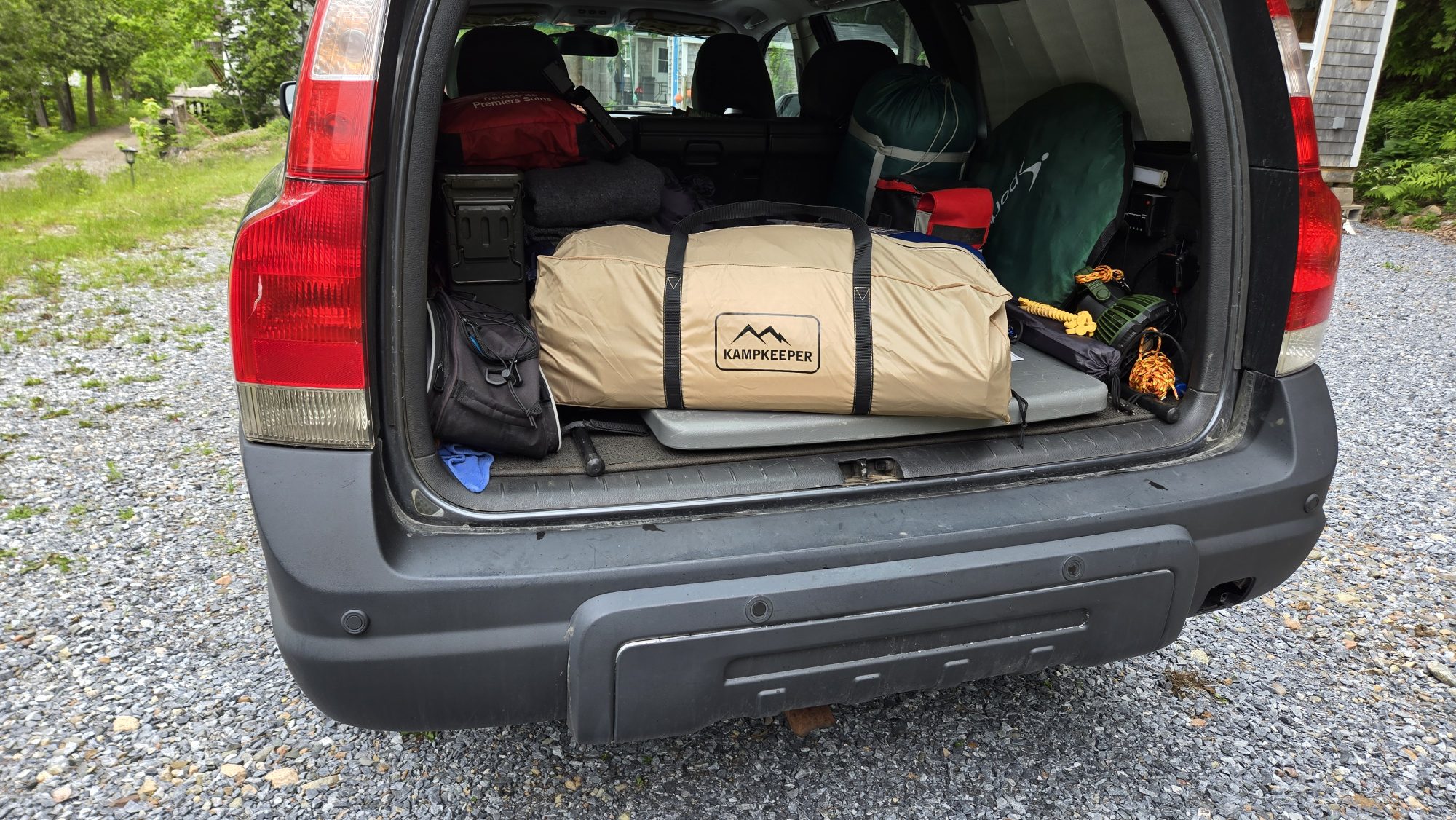
Alright, so the Kampkeeper tent arrived and I finally had the chance to get it out of the bag and set it up. I figured I’d share a quick rundown of what stood out—not a sponsored review or anything like that, just some honest impressions from someone who’s been messing around with SUV tent setups for a while now.
Setup went smooth. Took me about 15 minutes, but I’m confident that after a few more tries I could get it down to five, maybe less. Everything came together pretty intuitively—nothing confusing or overly fiddly.
A few things I appreciated right off the bat:
- Built-in vent stiffeners in the top corners. These, along with the Velcro strap stiffeners, do a good job keeping the vent flaps propped open, even when the tent is fully zipped up. Smart little detail that helps with airflow.
- Zippers and mesh feel solid. Nothing cheap or snaggy. Same goes for the tent material—it feels like it’ll hold up to some real use.
- Stake tabs are reinforced, and the bungee loops used for staking are easy to use and simple to swap if needed.
- Door/awning poles are sturdy and come with internal bungees, so assembly is quick and hassle-free.
- Straps for securing the tent to the vehicle are long and easy to adjust, making it simple to center the tent over the liftgate.
- The bumper skirt clips in with buckles, two on each side, and there’s tons of adjustability. That should help it fit a range of vehicles.
According to the listing, it’s supposed to provide about 110 sq ft of space. I grabbed a tape and did a rough measurement, factoring in the awnings, and it came out closer to 95 sq ft. That said, with some fine-tuning—pulling the tent tighter or sliding it a few inches back on the vehicle—I could probably close that gap and get the full coverage.
I also swapped out the included stakes. Most tents ship with sub-par ones, so I ordered a set of 10″ spike-style stakes to go with my existing screw-type ones. That added about $40 to the overall cost, but it’s worth it to have solid anchoring when the wind picks up.
So—is it worth the $199 CAD I paid? First impression: yes. Build quality is better than expected for the price, setup was easy, and the fit is flexible enough to work with more than just one vehicle type.
Before buying, I poked around online for other feedback—watched a couple of YouTube videos, read some comments. One person who’s been using it with their teardrop trailer for overlanding told me in a reply that it’s still holding up after a year of frequent use. That’s encouraging. I’m hoping mine holds up just as well with regular trips.
More updates to come after a few outings, but so far, I’m happy with the purchase.